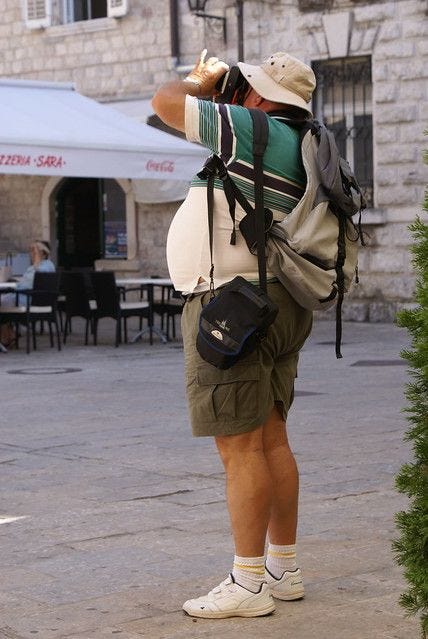
The locals lie.
Locals are usually the worst people to ask where to eat.

And yet every traveler asks them the same thing.
“Do you have any local tips?”
It sounds logical. If someone lives in a city, they must know the best places. But cities don’t really work like that.
When you live somewhere, you stop exploring it.
You settle into a rhythm. A coffee place in the morning. A lunch place around the corner. A bar you always end up in on Fridays. Maybe three neighborhoods. Maybe five streets.
The rest of the city slowly disappears from view.
Not intentionally. Just because life happens.
Work fills your days. Habits fill the rest. And before you realize it, the city you live in has quietly become much smaller than the one you arrived in.
I notice this in Amsterdam myself.
People constantly ask me where to eat. Tourists in the restaurant. Friends visiting for the weekend. Messages on Instagram from people planning a trip.
And every time, I’d recommend a few places.
At some point I realized something slightly uncomfortable.
Most of my recommendations were lazy.
Not wrong. But lazy.
I was naming places I already knew. Places near my house. Places I liked years ago. Places that felt safe to recommend because they’d been good for a long time.
Not necessarily the most interesting places in the city right now.
Just the easiest ones to remember.
Cities move faster than locals do.
Restaurants open quietly and suddenly become full every night. Chefs leave one kitchen and change another. Entire streets shift without most people noticing.
A bakery becomes known for the best croissant in the city. A wine bar opens in what used to be a bike repair shop. A taco place appears that only three cooks and one bartender know about.
This happens constantly.
Locals rarely keep up.
There’s another problem with local tips.
Taste.
A chef will send you somewhere very different than a bartender. A bartender will send you somewhere very different than a student. None of them are wrong.
They’re just describing their version of the city.
Cities don’t really need more tips.
They need better filters.
Think about how we discover music. Nobody walks up to a random person and asks what they should listen to tonight.
We follow playlists. Curators. People with a certain taste. Systems that filter the noise.
Cities work the same way.
A big city is basically an infinite menu. Restaurants, bars, cafés, bakeries. New openings, old institutions, hidden counters that only open three nights a week.
The challenge isn’t finding places.
The challenge is sorting them.
Travel guides tried to solve this.
Lonely Planet. Time Out. Travel blogs. But guides freeze time. By the time something gets printed, the city has already moved on.
Instagram didn’t solve it either.
It just replaced editors with algorithms. Which means the most visible places aren’t necessarily the best ones.
They’re simply the most photographed.
So travelers fall back on the same question again.
“Do you have any local tips?”
Which usually leads to the same handful of places everyone already knows.
The funny thing is that the best discoveries in a city rarely come from tips.
They come from patterns.
Where chefs eat after service. Where bartenders go when their shift ends. Which streets suddenly feel alive at night. Which restaurants quietly influence ten others.
Cities send signals.
You just have to learn how to notice them.
After years of working in restaurants and traveling constantly, I started paying attention to those signals. Certain neighborhoods begin to shift before anyone writes about them. Certain kitchens quietly shape an entire scene.
Once you see those patterns, cities stop feeling random.
They start feeling readable.
Which is why the question “Do you have any local tips?” always feels slightly wrong to me now.
It assumes cities are collections of places.
But they’re not.
They’re ecosystems.
And ecosystems don’t reveal themselves through tips. You have to learn how to move through them.
I’ve been building something around that idea.
A different way to explore a city.
Soon.
PS. If you ever notice where chefs eat after service, you’re already halfway there.